|
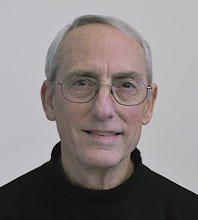 First of all, my last name is pronounced: SHORE-ee. The name is of Swiss origin, from the Canton of Bern, where it is spelled Schori. First of all, my last name is pronounced: SHORE-ee. The name is of Swiss origin, from the Canton of Bern, where it is spelled Schori.
Now, for the curious, here's a little background on my life and my lifelong passion for photography:
For my first thirty-one years, I called Illinois my home. Not long after my parents graduated from Pratt Institute in the early 1940's, they settled in the Chicago area, where my three siblings and I were born and my father worked as an industrial designer. We lived first in the small town of Bensenville, west of the city. Then, in 1959, we moved to Park Ridge, northwest of Chicago, where my father ran a small consulting industrial design studio. Reluctant (for no good reason) to follow in my father's footsteps, and having a keen interest in the sciences, I enrolled in the engineering physics curriculum at the University of Illinois in Urbana. During my third semester, however, I came to the realization that physics was too left-brained for me; I needed a profession that was more balanced between science and art. So I started over, more or less from scratch, and in 1970 graduated with a degree in industrial design. (To learn about industrial design, please visit the IDSA website; you can also find an excellent article on the history of industrial design in the Chicago area here.)
In 1977, having worked with several consulting studios in and around Chicago designing a wide variety of consumer products, I took a job in Dayton, Ohio with NCR Corporation (which some people recognize more readily by its old name, National Cash Register). This was their corporate studio, which managed the design done in thirteen locations around the world by more than twenty designers. My plan was to work at NCR no more than three years, but I ended up spending more than twenty there; by the end of my tenure, I had attained the position of Director of Industrial Design. For the most part, this was
interesting and rewarding work. We were widely recognized for the excellence of our award-winning global design strategy, which I had helped develop, implement and evolve. But in 1991 NCR was bought out by AT&T, which resulted in many changes to NCR's personnel, structure and priorities. Five years later, NCR was spun off as an independent company again, whereupon it attempted to redefine itself and reestablish its identity. Because the company had by 1998 curtailed most development and manufacturing of proprietary hardware products, and therefore did not need nearly so many designers, it began a process of drastically cutting back on its industrial design resources. So I left NCR that year and accepted a position teaching design and photography as the Nierenberg Chair of Design at Carnegie Mellon University in Pittsburgh for two
semesters. During this time, I chaired the national conference of the Industrial Designers Society of America in San Diego and had the honor of being elected into the society's Academy of Fellows.
As a backdrop to my thirty-year career in industrial design, my real passion has always been for photography. When I was a young child, I was
introduced to photography by my father (Kenneth P. Schory) and my maternal
grandfather (G. Allen Burrows).
My father enjoyed
photographing our family and the places we visited; he brought an artist's eye to it, and he enjoyed exploring different photographic techniques. I have vivid memories of the images he made with a Kodak stereoscopic camera, which provided a remarkable sense of depth and of "being there." However, at the age of 35 (I was nine at the time), he was completely blinded by diabetic retinopathy. This, in turn, led to my developing a deep appreciation for the importance and power of vision. As he and I traveled together, he would often ask me to describe what I saw, in a way that would help him form visual images in his mind's eye. In a sense, I became his eyes. Eventually, this led to my interest in capturing what I see, photographically, and sharing it with others. It is also the driving force behind my desire to open other people's eyes to the world around them -- to see the world, rather than simply look at it.
My grandfather created a number of wonderful journals, consisting of both words and photographs, of the people and places that were important to him. I was always amazed by how his photographs could transport me to distant times and places and make me feel as though I were actually there. Every summer, I would visit my grandparents at their idyllic, antebellum home they called "Cedarcroft" (after its huge cedar hedges) near the town of Olcott, New York on Lake Ontario, north of Buffalo. Often, I would stand beside Gramps in the tiny darkroom he had built in a corner of their musty, ancient cellar, and watch in amazement as images magically emerged in the developing tray under a bare, red lightbulb. I was also impressed by how Gramps would spend hours composing his journals, articles and poems in his favorite rocking chair in the living room, next to the stone fireplace. His (and my) favorite journal describes the summer he spent as a Forest Service fire lookout on a mountaintop in Idaho in 1916. To read a transcription of this engaging journal, click here.
Building on these influences, I took every opportunity to pursue my interest in photography throughout my career as an industrial designer. For most of this time, I stuck doggedly to the 35mm format, while photographing a diverse range of subjects. But in 1991, energized by a new marriage (to Joyce Hite) and moved by the death of my father, I finally yielded to the temptation to buy a view camera -- specifically, a 4x5 technical field camera, a compact version of a view camera suited for work in the wilds ("4x5" refers to the size, in inches, of the film it uses). This decision had a big impact on my life. Through the remainder of the 1990s, Joyce and I took several vacations a year, the main focus of which was to enjoy -- and photograph -- the most beautiful places we could find. "Nature" had long interested me more than any other subject, photographically, so that's what I concentrated on, to the exclusion of everything else. My goal was to make the very best landscape photos I could, and I figured that the only way to do that was to focus intensely on that one genre.
Once I had accumulated a modest portfolio of images, I began showing and selling them in exhibitions and galleries around the country. I had found that photography was (and continues to be) a way to share something of my experiences in nature with others and to connect with people at a deep emotional level. The degree to which my images do this, however, has greatly exceeded my hopes and expectations. In addition, they serve a purpose greater than my own sense of accomplishment: through these images, I aim to foster appreciation for and stewardship of nature.
After completing my tenure at Carnegie Mellon University in 1999, I decided to begin a new career, in the field I most enjoy, specializing in architectural photography. This allows me to remain connected with a creative community and to leverage my sensitivity to design, as well as the skills and insights I employ when doing landscape photography. (To see examples of my architectural photography, click here.) I have found the balance between "fine art" (landscape photography) and "applied art" (my commercial work) to be very satisfying and effective; each reinforces the other.
I believe that the most successful photographs are those that tell stories. I have also come to realize that this is extremely difficult to do well. For example, landscape photos may not have a dominant subject, such as a person, animal or building, to carry the image. Landscape photos don't have eyes! Instead, the appeal of an image must derive primarily from its technical and compositional qualities; there should be no technical or compositional flaws to detract from the image's expression, and the quality and spatial relationships of the visual elements (including light and color) should contain energy and elicit emotion. These principles apply equally to my architectural photos, even though they do have a dominant subject. By approaching them much as I do landscape photos, the result is that they entice people to study them -- they draw the viewer in -- and they tell stories about their subjects, rather than simply being images of their subjects. This is an important distinction. I strive to tell stories about my subjects in every image.
No photographer -- no artist, in fact -- works in a vacuum. While I continually study the work
of other photographers, I have taken most of my inspiration from painters. From an early age, I was exposed to the work of The Masters. As both of my parents had a strong interest in art (my father being an industrial designer and my mother, an illustrator), they often took me to the Art Institute of Chicago to steep in the likes of Homer, Rembrandt, Seurat, Monet, Millet and Wyeth. I
especially appreciate the quality of color and light captured by the Impressionists, as well as by European and North American painters whose work is
characterized by rich tonality, fine detail, and exquisitely balanced dynamic composition. I believe that in fine photography, as in painting, every detail must contribute
to the overall "soul" of an image. While photography and painting present somewhat different sets of stimuli, and the processes and media involved are quite different, my goal is to create photographs that approach the quality of light and perfection of composition that I admire so much in certain kinds of paintings. Many people, in fact, have referred to my photos as paintings.
I would also like to mention that while
I appreciate and enjoy fine black-and-white (monochrome) photography, I choose to work in
color because color is an important component of my experience. My intent is to tell visual stories about my experiences, with every photograph I make, and that includes color, which is a key compositional element.
Finally, a word about my photographic process: My pace in creating a photograph is not unlike sketching or
painting a watercolor: it takes time, planning, patience and a certain frame of mind to do it right. Before releasing the shutter, I carefully compose and refine each image,
getting it as near to perfection as I can. As time-consuming as this process is, one must also consider the time spent driving and hiking in search of the
images in the first place. Of course, there are also the challenges of working with existing
light, weather, subject matter and terrain. Once I have "captured" an image (recorded it on film or with a digital sensor), I spend a great deal of time at my computer processing it, to make it as faithful as possible to what I saw and felt "in the moment." In other words, I put tremendous effort and care into processing my images so that they look like they haven't been processed at all. I need to do that because neither film nor digital sensors can capture precisely the subtleties that our incredible mind/brain systems can perceive. But this is what it takes to produce images that transcend mediocrity and faithfully express one's experiences.
Note #1: As you browse through my landscape images, you may notice that, with the exception of the year 2000, when I took an extended trip through the western states, there is a relative gap in my image production from 1998 through 2007. This is due to responsibilities (i.e., teaching, caring for an elderly parent, and starting a new career as a commercial photographer) that required my wife Joyce and me to stay close to home. Now that we are free to travel again, I am happy to be posting more frequent additions to the collection of landscape photos.
Note #2: You
can find additional information on my techniques, etc., by clicking on the button titled "THE STORY BEHIND THIS IMAGE" that you'll see below many of the images.
Those images are also indicated by an asterisk (*) in the Index
by Numbers list. There is further information on the Technical Details page and in the articles to which there are links at the bottom of this page.
Note #3: Further discussion of my views on landscape photography and my personal philosophy can be found here.
I hope you enjoy this website.
As you browse through the images, please note that I reserve all
rights to any commercial use of them, and that right is protected by the full force of federal
copyright laws. However, you may feel free to download the images and use them as screen savers
or for other personal use.
I welcome your comments and
suggestions. You can contact me easily by clicking here.
Ken Schory
|